Showing posts with label performance enhancing drugs. Show all posts

Thursday, June 26, 2025

Review of "Death of a Racehorse"

I used to follow horse racing more closely but the recent scandals, deaths of horses and general overall lack of enthusiasm about the sport compared to others has made me follow it less and less.  Nevertheless, I was intrigued by this book by its title - the book was not quite what I expected but still a good read.  


Title/Author:

Death of a Racehorse: An American Story” by Katie Bo Lillis

Rating: 

4 of 5 stars (very good)

Review:

Horse racing has been rocked by scandals involving drugging and doping the race horses and the deaths of some of these thoroughbreds. The death of Medina Spirit, the horse trained by well-known trainer Bob Baffert and whose Kentucky Derby win was taken away when testing revealed a banned substance in the horse’s system.  That was the start of this in-depth look at the world of horse racing by Katie Bo Lillis.

The title of the book and the first chapter made me think that this was going to be a compilation of sad stories of horses who had to be euthanized for one reason or another due to their participation in races. That turned out not to be the case at all as Lillis, a journalist who used to work in the racing industry, exposed both the therapeutic and performance-enhancing use of various drugs in horses that run in the sport.

The book also took a critical look at training methods, the horse racing industry as a whole and the various degrees of interest by the federal government in their investigations of criminal activity in the sport.  An example of this would be the consideration of wire fraud charges if illegal substances were sold across state lines using electronic technology (phone, email, texting, etc.) and money exchanged hands.  There are many people involved in these stories, not just the big names like Baffert. 

It was also interesting to learn new knowledge about the industry.  One example that was a recurrent topic in the various chapters was the need for a full complement of horses to run in each race for an event to turn a profit. This is so that there are more betting options for gamblers, resulting in a higher purse for the track.  It makes sense after reading this, but it is something that I was never aware of.

At times, the book does get very detailed, especially about the drugs used in the sport.  It felt at times I needed a pharmacology degree to understand these nuances, but despite this, it is a book that is very informative and one that would be enjoyed by readers of all levels of interest in horse racing.  

I wish to thank Simon & Schuster for providing a copy of the book. The opinions expressed in this review are strictly my own.

Link: Death of a Racehorse: An American Story: Lillis, Katie Bo: 9781668017012: Amazon.com: Books


Monday, July 4, 2022

Review of "Doping"

Happy Independence Day to those in the United States who are celebrating today.  It feels ironic to be posting a review about a sports book that is international and not US-centric today.  This book on doping and PED use in international competition is one of the better books I have read so far in 2022 - and sorry, there is only a very brief mention of baseball in it.  Here is my review of "Doping." 

Title/Author: “Doping: A Sporting History” by April Henning and Paul Dimeo

Rating: 5 of 5 stars (excellent)

Review:  The use of various types of performance enhancing drugs (PEDs) in various sports is not a relative new phenomenon.  Methods of doing so have been around about has long as the modern Olympic games, which started in 1896.  This book by April Henning and Paul Dimeo takes a complete look at this issue from many different angles.

One of the most striking features of the book is that while it is a scholarly work in which they present theories and possible resolutions, the language and format is very easy to follow and a reader will notice that aside from the scientific names of some of the drugs, it is written in plain language.  That will help the non-scholarly reader to comprehend and absorb the points the authors are making.

The variety of sports is far-reaching and international.  While much of the international competition in which the authors describe are the Olympic Games (both Summer and Winter) there are other international competitions included as well.  This is especially true for two sports that internationally have been ripe with drug issues, track and field and cycling. There is an entire chapter devoted to Ben Johnson’s disqualification from the 1988 Olympics, for example. 

There is also extensive research and text on the use of PEDs in communist nations during the Cold War era.  Most notably, that of East Germany, whose athletes would regularly earn more medals than the United States despite having a significantly smaller population. The stories of their athletes requiring the use of these drugs or else they could not compete were compelling.

Although their work on the use of PEDs was very good, the criticism and suggested solutions of the enforcing agencies, current the World Anti-Doping Agency (WADA) made the book one that was hard to put down.  Just about any critical idea one can think of for these enforcers was included.  The determination of what was a PED and the science behind these decisions was questioned at times. This included things like banning cold medicines that were taken for illness but resulted in an athlete’s disqualification because it contained trace amounts of a banned substance. The lack of communication of what these banned substances would be and what products would contain them was criticized by the authors, as were the punishments as individual athletes would suffer from draconian measures. These included  bans from competition or awards taken away while larger organizations and nations would either receive light warnings or even nothing at all. The authors then conclude the book on their suggestions on how to right this matter, striking a balance between fair enforcement and keeping the competition fair for all.

From the first Olympic games to the 2016 scandal that plagued the team from Russian, this book is a wonderful and complete look at the use of various drugs and other scientific advancements to improve the performance of various athletes.  No matter one’s sports interest or interest in this topic, it is a book that is well worth the time to read.  

I wish to thank Reaktion Books for providing a copy of the book in exchange for an honest review.

Links:  Amazon.com: Doping: A Sporting History eBook : Henning, April, Dimeo, Paul: Kindle Store


Wednesday, April 6, 2022

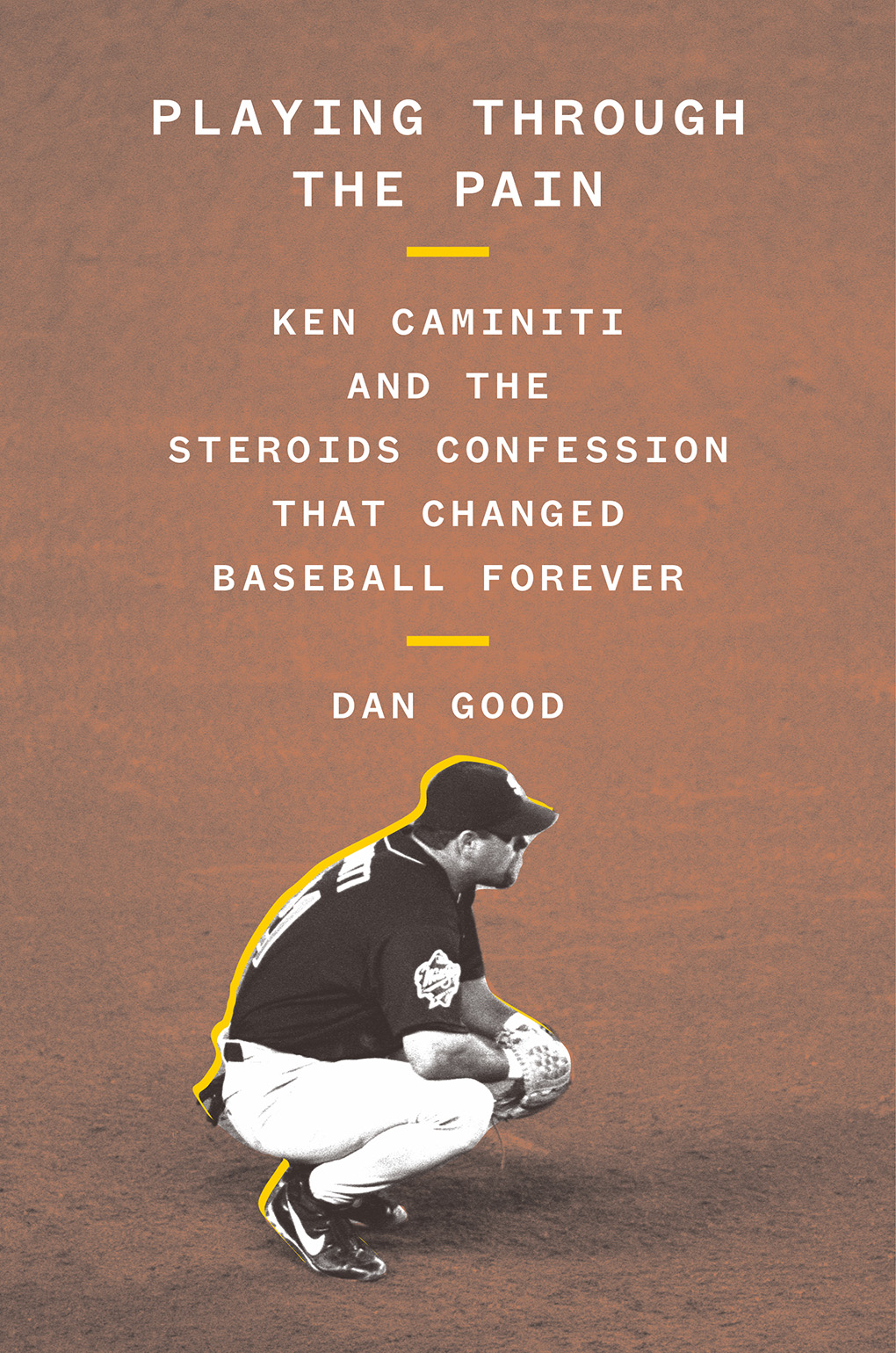
Review of "Playing Through the Pain"

With the opening of baseball season, it's only appropriate to review a baseball book the day before Opening Day.  And what a book this was - a fantastic biography of former MVP Ken Caminiti.  Here is my review of "Playing Through the Pain."

Title/Author: “Playing Through the Pain: Ken Caminiti and the Steroids Confession That Changed Baseball Forever” by Dan Good

Rating: 5 of 5 stars (excellent)

Review:  If there is one “a-ha” moment when steroid use could no longer be a dirty little secret within Major League Baseball, it was when Sports Illustrated published an interview with Ken Caminiti in 2002 when he disclosed that he used steroids through much of his career, including when he was the National League MVP in 1996 while playing for the San Diego Padres.  This book by Dan Good is a terrific look at Caminiti’s life and career that has many highlights as well as many demons beyond just using steroids.

While outstanding in many ways, what may be the most impressive aspect of the book is how many people Good interviewed to paint a complete picture of Caminiti.  Over 400 people talked on the record to good and it wasn’t just the usual collection of former teammates, family members and business acquaintances.  The people who shared their thoughts on him ranged from Ken’s girlfriends in middle school to his physical therapist when he was rehabbing from injury to his parole officer after one of his multiple arrests on drug possession. 

All of these people, plus the extensive research by Good help to paint a complete and very complex picture of Caminiti.  On the field, he was both consumed with perfection and competition.  He was going to make sure that he always performed at his best, opponents or injuries be dammed.  While he was fiercely competitive, as are most athletes, he was always quick to help other players improve.  This included players who he felt might be taking away his job.  Many of the people interviewed would mention how he was always willing to help others.

But despite this, the demons of alcoholism and drug addiction, including cocaine, were the worst enemies for Caminiti.  They not only helped in his decline as a player, but they were also detrimental to his friendships and his marriage.  Good describes his ex-wife Nancy in almost saintly terms on how she held together their family while Ken was in and out of substance abuse treatment several times.

The passages about his play on the diamond were very good as well.  There isn’t a lot of play-by-play analysis or extensive reviews of his seasons, including his best ones with the Houston Astros (two separate tours) and the Padres.  Caminiti also tried to salvage his career in 2002 with the Texas Rangers (I thought Good’s frequent reference to Alex Rodriguez with that team as the “$252 million man” was funny) and Atlanta Braves.  No matter what team he was with and whatever his level of ability was at, he was always remembered fondly by teammates, especially Hall of Fame second baseman Craig Biggio from the Astros.

Of course, one of the main questions that readers will have when selecting this book will be about steroids.  Good’s passages about this, from the acquisition of the drugs by friend Dave Moretti to Ken’s inner demons on why he needed to use them to the two interviews by Jules Roberson-Bailey and later Tom Verducci that were used in the bombshell Sports Illustrated article on his use.  Throughout the book, Caminiti is portrayed by many who, when not under the influence of any drug or alcohol and is thinking clearly, will speak in a matter-of-fact tone and that is how he is portrayed in giving these interviews.  Good should also be credited with being open minded about steroid use by Caminiti. If there is any bias, Ken does come across as a person with whom one can sympathize, but even that is tempered and the reader is left to come up with their own conclusions.

Every baseball fan who watched the game during the era of steroid use when statistics were altered, bodies of players changed and the sport enjoyed a rebound of popularity after the 1994-95 strike should add this book to their reading list.  It doesn’t matter whether one liked Caminiti or even never heard of him, it is a great read about a very complex man.

I wish to thank Abrams Press for providing a copy of the book in exchange for an honest review.

Link:   https://www.amazon.com/Playing-Through-Pain-Caminiti-Confession-ebook/dp/B09C17ZKJ5/ref=tmm_kin_swatch_0?_encoding=UTF8&qid=&sr=


Wednesday, March 7, 2018

Review of "The Comeback"

Those who follow my reviews know that while I love to read about all sports, I especially enjoy books on baseball, hockey and boxing.  Now I can add a fourth sport to this short list: cycling.  Between Tyler Hamilton's memoirs and this outstanding book on Greg LeMond, I am finding books on cycling just as compelling as the other three.  Here is my review of "The Comeback."


Title/Author:
The Comeback: Greg LeMond, the True King of American Cycling, and a Legendary Tour de France” by Daniel de Visè
Tags:
Cycling, biography, history, performance enhancing drugs
Publish date:
June 5, 2018

Length:
432 pages
Rating: 
5 of 5 stars (Outstanding)
Review:
Greg LeMond woke up the American sporting public to the Tour de France with his upset victory in the 1986 race.  Three years later, after his career nearly ended due to injuries suffered in a shooting accident during a hunting trip, he again won the race by eight seconds over Frenchman Laurent Fignon. The final stage of the race is the starting point of this terrific book by Daniel de Visè.

While the book primarily tells the story of LeMond’s life and career, the reader will learn much about other prominent cycling athletes. The reader will learn why LeMond chose cycling for his sport (he wanted to compete in sports where “I could accomplish something myself without having to depend on others”), the sexual abuse he suffered at the hands of a family member and how he became the voice of “clean” racers when the doping culture of the sport became more prominent in the age of erythropoietin (EPO) and later “mechanical doping” in which a small machine would aid a cyclist with his speed.

Of course, the book delves into the fall of Lance Armstrong and Greg’s interactions, both the good and the bad, with the fallen star. It made for great reading, as it almost felt like a soap opera, as Armstrong first was counting on LeMond’s advice on the life of a professional cyclist, then later as the doping accusations became louder, Armstrong nearly destroyed LeMond’s life, including the public revelation of Greg being a victim of abuse.  While much of this material is available in other books, this account felt like a very intimate and personal version.  This was just one example of the outstanding writing that was on display throughout the book.

The story of Fignon is just as compelling in this book as is LeMond’s as their lives seemed to move along parallel paths. Like Greg, Laurent had his own demons and had to come back from a serious injury.  The 1989 Tour de France was the signature race of his comeback, just like LeMond, only with a different result. The reader feels both LeMond’s joy and Fignon’s agony in this result throughout the book as the results affected both men for the rest of their lives.

The strategy of tour racing, how teams work to ensure that their strongest rider will have a chance for victory and the cutthroat nature of the sport are all on display in sections about the races. The description of the peloton, or pack of riders, and what goes on in that mass of bikes and humans, was very compelling and I enjoyed learning just how important a role the peloton plays in the strategy for riders during a race.  

No matter the level of knowledge or interest the reader has in cycling, this book is a must read for all sports fans who love a good story of a classic comeback and of the adventures of athletes, both “good” and “bad”.  I have been enjoying books on the sport and this one is certainly one of the best.

I wish to thank Atlantic Monthly Press for providing a copy of the book via NetGalley in exchange for an honest review.

Book Format Read:
E-book (Kindle)

Buying Links:


Sunday, January 14, 2018

Review of "The Secret Race"

One resolution that I plan on keeping this year is to clean out the older books on my shelves or e-reader clouds.  The challenge I had earlier posted was one part of this resolution - the other was simply to read some of the books I bought a long time ago, but never got to read.  This book is one of them - and now I wish I had read it as soon as it popped up on my Nook. An outstanding memoir that provides an inside look at the world of cycling and its doping scandal, I recommend that everyone reads this, even if they are not fans.  Here is my review of Tyler Hamilton's memoir, "The Secret Race."


Title/Author:
The Secret Race: Inside the Hidden World of the Tour de France” by Tyler Hamilton and Daniel Coyle
Tags:
Cycling, performance enhancing drugs, memoir
Publish date:
September 5, 2012

Length:
306 pages

Rating: 
5 of 5 stars (outstanding)
Review:
The rise and fall of Lance Armstrong was a spectacular story on both ends.  The doping scandal that was rampant in the sport of cycling ensnared not only Armstrong, but many of his teammates and competitors.  One of those cyclists, Tyler Hamilton, shares his story about his time in the sport and with Armstrong (called “Lance” throughout the book, not “Armstrong) in this outstanding memoir, co-written with Daniel Coyle.

What especially struck me about the book was Hamilton’s attention to every detail about the doping that goes on in cycling.  Not just the substances used, but the nicknames given, the undercover nature of communication between athletes and doctors, the methods of taking the drugs and the benefits a cyclists gets during the races.  Whether it was Hamilton’s description of taking “Edgar” (Erythropoietin), the details of his “BBs” (blood bags) when getting a transfusion of his own blood, or the conversations between racers on the trail, this is a book that is a page-turner, no matter what the reader’s level of interest may be in the sport of cycling.

The stories of how racers would either avoid or outsmart the drug testers read like spy novels.  This level of deceit, lies and evasion could only be told by someone who lived this type of life and Hamilton does it well.  This is true when not only talking about his own doping, but also that of Armstrong and other Postal team members.  He at times seemed in awe of Armstrong (before Lance’s eventual downfall) because he was always able to find a way to talk his way out of a tough situation.

Hamilton’s story itself is also very interesting, with his own climb from riding for various smaller teams to getting a spot in the prestigious US Postal team, the one that Armstrong raced for during his record stretch of Tour de France wins, wins that have since been stricken from records.  Hamilton himself has had the same thing happen to him with his 2004 Olympic gold medal in doubt because of a positive drug test.  While relieved he was able to keep his medal when the validity of the second positive test could not be verified, he eventually came clean on his doping. 

If a reader wants to learn about the actual sport, this book is a great source to do so.  Hamilton’s description of the riders who have to set the pace for the leaders, those who ride in packs or those who have to keep pace with the lead cyclist so that leader can maintain the speed he needs to keep the lead, is full of details that make a reader feel like he or she is on the bike. 

This book is a must-read for anyone who wants to know more about the doping scandals in the sport of cycling or learn about the story of this Olympic champion whose personal and professional life took many drastic turns.  Be forewarned – once you pick up the book, you will not want to put it down.

Book Format Read:
E-book (Nook)
Buying Links:


Saturday, February 25, 2017

Review of "Banned"

When I saw this book available for review, I thought it would be mainly about the 1919 Black Sox and Pete Rose.  While they are covered in the book, there are so many more players, managers, owner and even a team doctor that have been kicked out of the game at some point. Whether for just a few games or for life, suspensions and banishments from baseball are covered here.


Title/Author:
“Banned: Baseball’s Blacklist of All-Stars and Also-Rans” by Hal Bock

Tags:
Baseball, professional, gambling, performance enhancing drugs

Publish date:
February 21, 2017

Length:
148 pages

Rating: 
4 of 5 stars (very good)

Review:
Many players, managers, umpires, executives and even a team doctor have been banned from baseball over the history of the office of the commissioner of baseball. From the first commissioner, Judge Kennesaw Mountain Landis to the current commissioner, Rob Manfred, each one has acted in what he believe would preserve the integrity of the game. The stories of some of those who faced suspension or expulsion are told in this book by Hal Bock.

Well-known stories such as those of the eight players from the 1919 Chicago White Sox, the suspension of Alex Rodriguez for the 2014 season and Pete Rose are covered, but so are the suspensions of others who were not as well know. Jimmy O’Connell and coach Cozy Dolan of the New York Giants who were suspended for a failed bribe attempt. In 1946, the second commissioner of the game, Happy Chandler, stated that any player who left for the brand new Mexican League would be suspended from Major League Baseball for five years.  Suspensions of owners like George Steinbrenner and Marge Schott are covered and even the brief expulsion of Willie Mays and Mickey Mantle for accepting promotional jobs for casinos.

No matter who the subject of the suspension was, each one is covered by a brief story that explains the behavior that warranted the suspension and the commissioner’s reasoning. That may or may not be something the reader will agree with, but each story is structured in this manner and makes for quick reading for each chapter.  None of these chapters fully describe the entire story, especially those of the 1919 White Sox or Rose, as there are other publications that delve much deeper into those topics. However, if the reader is looking for a quick and informative book on each of the persons who have been punished by a baseball commissioner, then this book will fulfill that need. 

I wish to thank Diversion Books for providing a copy of the book via NetGalley in exchange for an honest review.

Book Format Read:
E-book (Kindle)

Buying links:


http://www.barnesandnoble.com/w/banned-hal-bock/1125579470?ean=9781635760316


Monday, December 5, 2016

Review of "Suicide Squeeze"

It's hard to believe it was nearly 12 years ago that several major league baseball players were called before Congress to testify about the use of steroids and none of them (Mark McGuire, Sammy Sosa, Rafael Palmiero and Jose Canseco) had much to say that was helpful.  However, parents of two young men who committed suicide after abusing steroids chasing their baseball dreams did present powerful testimony.  The stories of those two young men whose lives ended far too soon are the subject of this book.  Here is my review of "Suicide Squeeze."


Title/Author:
“Suicide Squeeze: Taylor Hooton, Rob Garibaldi and the Fight Against Teenage Steroid Abuse” by William C. Kashatus

Tags:
Baseball, high school, college, youth sports, USC, performance enhancing drugs

Publish date:
January 23, 2017

Length:
256 pages

Rating: 
4 of 5 stars (Very good)

Review:
Much has been written and said about the use of steroids, or performance enhancing drugs (PEDs) in Major League Baseball.  However, the use of PEDs is not limited to the big leaguers – there are also players who have used them in high school, college and amateur baseball in order to gain a competitive advantage. The stories of two players who used them and ultimately committed suicide are the central tales of this book written by William C. Kashatus.

The two players involved are Taylor Hooton (cousin of former major league pitcher Burt Hooton) and Rob Garibaldi. Both players started using steroids in high school with the hopes of improving their performance in order to attract the attention of professional scouts or obtain college scholarships. The latter did happen for Garibaldi, as he was awarded a scholarship to the University of Southern California, one of the more prestigious college baseball programs. However, both of them ultimately committed suicide as the side effects of the drugs took effect.

The book starts out with the testimony of a parent of each player, Don Hooton and Denise Garibaldi, presented to Congress during the 2005 hearings on PED use in baseball.  That was the most powerful section of the book as both parents gave moving accounts of what their sons went through and the responsibility that major league baseball has in letting everyone know about the danger of these substances.

From there, the reader will learn much about the two young men, their dreams and what they would do in order to achieve them.  More than just success on the diamond, Kashatus also explains other reasons that young men would want to use these drugs, such as physical enhancement to be more attractive to the opposite sex.  Kashatus conducted interviews with family members and also did extensive research on the drugs. Some of those passages are very technical in nature. If the reader is not familiar with this topic, they will have to be carefully read in order to fully appreciate what the drugs to one’s body and mind.

Written with the goal of hoping to prevent additional suicides by young athletes, this book is one that should be read by anyone who is involved in youth sports in order to fully learn about the dangers of abusing these drugs. It will make the reader stop and think about PEDs and whether the risk of taking these is worth it.

I wish to thank Temple University Press for providing a copy of the book via NetGalley in exchange for an honest review.

Book Format Read:
E-book (Kindle)

Buying links (pre-order at time of review):


Sunday, January 31, 2016

Review of "Team Chemistry"

Looking for something a little different than the usual biographies and baseball history books, I decided to try this one when I saw it offered on NetGalley.  While there is a lot of history dialogue, it certainly is a different take on a different baseball subject. Here is my review of "Team Chemistry."


Title/Author:
“Team Chemistry: The History of Drugs and Alcohol in Major League Baseball” by Nathan Michael Corzine

Tags:
Baseball, professional, drugs, history, performance enhancing drugs

Publish date:
January 30, 2016

Length:
244 pages

Rating: 
4 ½ of 5 stars (Excellent)

Review:
While the use of performance enhancing drugs (PEDs) has been a source of controversy in Major League Baseball for nearly two decades, this issue is not the first time that the sport has been engulfed in issues with drugs. This book by Nathan Michael Corzine makes the case that PEDs are simply the latest in a long list of uses and abuses of drugs, alcohol and tobacco products by baseball players. 

Whether the use of the substances was for medical purposes, such as those used by Sandy Koufax, or for recreational use, such as the drinking of Mickey Mantle or the cocaine use by players in the 1980s like Tim Raines, Corzine writes of a long history of the use of many substances. The economics of the use of substances is also explored as fund from tobacco and alcohol advertising was a major source of revenue for the clubs in the first half of the twentieth century. 

Much like how the sport has evolved through the years on the field, Corzine writes about the uses of the various substances as an evolution as well.  From the alcohol and tobacco to marijuana and cocaine to PEDs, each era is chronicled for not only the use by players, but what was done by the game’s commissioners and owners to address the uses. That ranges from doing nothing to damage control due to bad publicity to proposing random testing.  Each topic is described in great detail and through excellent research and writing, the reader will learn much about the history of substance use in the game.

Readers may be tempted to try to judge whether one era of substance use was worse than another, like I did, and that would be a mistake. The book makes it easy to try to judge each player described, the closest to a negative aspect in it.  However, that doesn’t take anything away from the overall quality of the writing or the factual reporting.  Any reader who is interested the history of baseball should read this one.

I wish to thank University of Illinois Press for providing a copy of the book via NetGalley in exchange for an honest review. 

Book Format Read:
E-book (Kindle)

Buying links:


Sunday, June 23, 2013

Review of The Dirtiest Race In History

Back to reviewing books!  This book on the historic 100 m final in the 1988 Olympics is reviewed today. 


Title/Author:

“The Dirtiest Race In History: Ben Johnson, Carl Lewis and the 1988 Olympic 100 M Final” by Richard Moore


Genre:

Track and Field, Summer Olympics, performance enhancing drugs, politics, Ben Johnson, Carl Lewis

Published:
 
June 7, 2012

Length:

336 pages

Rating:

4 of 5 stars (very good)

Review

The 100 meter final in the 1988 Olympics in Seoul has been called the greatest race in the history of track and field.  Ben Johnson of Canada and Carl Lewis of the United States headlined the event, which resulted in Johnson winning the gold medal with a world record time of 9.79 seconds.   However, the post race drug testing found that Johnson had traces of illegal substances in his urine and was disqualified.   This book by Richard Moore examines the activities and training of these two men and how it ultimately leads to the event being a historical one for completely different reasons.

Moore researches the lives and training of both Lewis and Johnson thoroughly.  Nothing is left untouched – their workout routines, the trainers each used, the methods used by those trainers and yes, the substances that were used as well.  While most remember Johnson’s disqualification, it is worth noting that the author does not paint a rosy picture of Lewis for this topic either.  Lewis was also found to have traces of banned substances after the US Olympic trials, but he was able to compete due to officials accepting his explanation.  It should be noted that athletes were given chances to explain the presence of the substance in their samples, including during the Olympics, and Lewis’ was deemed satisfactory.

The stories of the two main runners were richly portrayed.  I was especially enamored with Moore’s portrayal of Lewis and how he reacted to the negative media he often received, including his lack of sponsorship opportunities after winning four gold medals in the 1984 Olympics.   Both Lewis and Johnson are thoroughly examined in the book.  A very good book that is a great read for not only sports fans, but those who like to dig deeper into controversial topics.

Did I skim?

No

Did I learn anything new?

Yes – while I was aware of the rivalry between Johnson and Lewis, I did not realize how much bitterness there was between the two athletes, especially on the part of Johnson toward Lewis.   Also, this book will reveal the identity of the “mystery man” who was with Johnson during the drug testing immediately after the 100 m final.  Now, of course I am not going to reveal that if you don’t already know – you have to read the book!

Pace of the book: 

Good for the most part.  Some of the sections on the trainers and the science behind the drugs was a bit heavy and slowed the book down.

Positives:

Excellent research and insight into the two athletes, especially Johnson.   Other runners in that 100 m final such as Calvin Smith are also covered well.

Negatives:

Only the aforementioned parts of the science behind the drugs.   While interesting and an important part of the story, I felt that those without the background knowledge would be lost reading this section.

Do I recommend?

Yes, for track and field fans and also those who enjoy the Olympics, whether watching or researching history.

Book Format Read:

Ebook (Nook)

Author Media Links:


Buying links:


http://www.barnesandnoble.com/w/dirtiest-race-in-history-richard-moore/1110780809?ean=9781408135952