Showing posts with label Astros. Show all posts

Monday, November 3, 2025

Review of "Tao of the Backup Catcher"

Needing to find a good audio book on a recent drive to the Baseball Hall of Fame, I found this one buried in my Audible library.  Downloaded it and enjoyed it immensely.  Here is my review of "The Tao of the Backup Catcher." 


Title/Author:

“The Tao of the Backup Catcher: Playing Baseball for the Love of the Game” by Tim Brown, narrated by Tim Brown and Justin Price

Rating: 

5 of 5 stars (excellent)

Review: This is a question for baseball fans, no matter what their level of interest.  Can you name the backup catcher for your favorite team?  If you can’t, then have no fear, this book by Tim Brown on one of the more unknown yet fascinating positions on a baseball team is part biography, part philosophical waxing and all a fun read.

The biography part is on a career backup catcher who had many stops in both minor league towns and in MLB cities, Erik Kratz.  Brown chronicles Kratz’s many stops along his way to appearing in 332 major league games over 11 seasons.  Just his list of MLB teams is extensive – nine different teams. Starting with the Pirates (when he was 30 after spending eight years in minor league baseball), Phillies, Blue Jays, Royals, Phillies a second time, Astros, Pirates a second time, Yankees, Brewers, Giants, Rays and Yankees a second time when he decided to retire for good at age 40. And this doesn’t cover all the moves to different minor league towns. Through it all, there are plenty of interesting stories about him and his wife.

However, the best stories are not really about Kratz personally or the other backup catchers whose names are mentioned throughout the book.  What is the best aspect of the book is how this job, while well paying, is one that is full of many different tasks.  Everything from warming up pitchers in the bullpen to how it is difficult for the backup catcher to get enough batting practice is covered.  Not everything in the book is related to what happens in the ballpark.  With so many moves, there is plenty of material on the many tasks Mrs. Kratz did to move the family.  Another great (and funny) anecdote is about Erik’s shower shows – there is enough about them that they get their own chapter.

This is just a small sample of the very interesting and fun material to digest in this book.  Like many who hold the position, this book may not make best seller lists, but it is one that baseball fans will want to have in their library and have ready when they need a lighter read – their backup catcher of baseball books.

Link: Amazon.com: The Tao of the Backup Catcher: Playing Baseball for the Love of the Game: 9781538726556: Brown, Tim, Kratz, Erik: Books

Friday, October 10, 2025

Review of "Winning Fixes Everything"

Just when I thought I couldn't learn anything new about the 2017 Houston Astros and the cheating scandal, along comes this book on my suggested reads.  So I try it, and like Mikey in the Life commercials, I liked it!  Here's my review. 


Title/Author:

“Winning Fixes Everything: How Baseball’s Brightest Minds Created Sports’ Biggest Mess” by Evan Drellich

Rating: 

5 of 5 stars (excellent)

Review:

Anyone with even a passing or casual knowledge of recent baseball history knows about the scandal involving the 2017 Houston Astros. Using television monitors and banging on trash cans, Houston batters were able to know what type of pitch was coming to them and used that advantage on their way to the championship.  However, there is much more about this scandal both before and after that World Series.  Evan Drellich, the reporter who first broke the story of the cheating by the Astros, has written an excellent book on the entire background of the club.

There isn’t a lot about the actual cheating by the Astros during the games in the book.  Instead, Drellich helps the reader understand why the Astros got to that point by examining the culture in both the locker room and the front office. It really started when owner Jim Crane hired Jeff Luhnow away from the St. Louis Cardinals as the general manager.  Luhnow also brought with him Sig Mejdal and together they built an extensive analytics department.  That was considered cutting edge at the time, despite the poor on-field record by the Astros.

Cutting also describes the economic principles of Luhnow as he brought in consultants from his former employer McKinsey.  The team operated on a shoestring budget but grew in analytics to the point of tanking 3 seasons to eventually win a championship.  It all worked, but as Drellich shows, it came at a huge cost.

What really struck me in this book was not so much the on-field records, play or even cheating by the Astros.  The entire culture around the team, while some of it was well-known, still was quite a shock to me while reading this. The most egregious of these was the treatment of women by Crane, Luhnow and assistant GM Brandon Taubman, who went so far to glorify the Astros signing a pitcher who had been charged with domestic violence.  Taubman did this in front of three female reporters, including one who wrote critical articles about the team signing that player. 

Drellich’s reporting and writing about this aspect of the team, as well as the fallout in future seasons for the Astros even as they continued to be a dominant force in the American League, is excellent.  He leaves nothing uncovered – even the controversy surrounding the penalties given to the Astros by baseball Commissioner Rob Manfred and the reasons why he acted as he did are well covered and explained.  This book is an excellent one on top of other good books on this team that have already been published.  What set this one above the others for me is the in-depth description of the entire culture inside the team, which was certainly NOT pretty.

Link: Winning Fixes Everything: How Baseball's Brightest Minds Created Sports' Biggest Mess: Drellich, Evan: 9780063049048: Amazon.com: Books


Wednesday, April 6, 2022

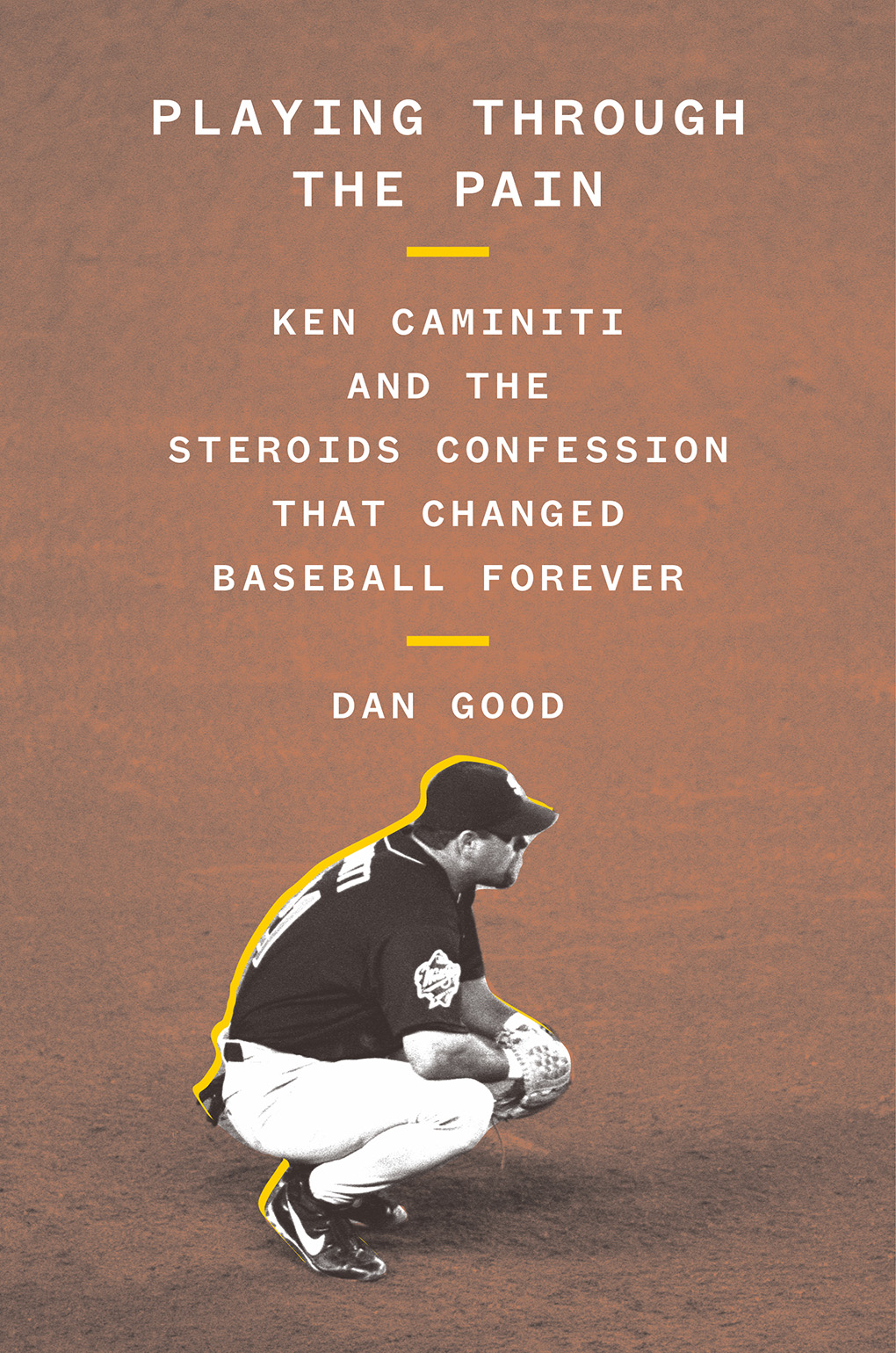
Review of "Playing Through the Pain"

With the opening of baseball season, it's only appropriate to review a baseball book the day before Opening Day.  And what a book this was - a fantastic biography of former MVP Ken Caminiti.  Here is my review of "Playing Through the Pain."

Title/Author: “Playing Through the Pain: Ken Caminiti and the Steroids Confession That Changed Baseball Forever” by Dan Good

Rating: 5 of 5 stars (excellent)

Review:  If there is one “a-ha” moment when steroid use could no longer be a dirty little secret within Major League Baseball, it was when Sports Illustrated published an interview with Ken Caminiti in 2002 when he disclosed that he used steroids through much of his career, including when he was the National League MVP in 1996 while playing for the San Diego Padres.  This book by Dan Good is a terrific look at Caminiti’s life and career that has many highlights as well as many demons beyond just using steroids.

While outstanding in many ways, what may be the most impressive aspect of the book is how many people Good interviewed to paint a complete picture of Caminiti.  Over 400 people talked on the record to good and it wasn’t just the usual collection of former teammates, family members and business acquaintances.  The people who shared their thoughts on him ranged from Ken’s girlfriends in middle school to his physical therapist when he was rehabbing from injury to his parole officer after one of his multiple arrests on drug possession. 

All of these people, plus the extensive research by Good help to paint a complete and very complex picture of Caminiti.  On the field, he was both consumed with perfection and competition.  He was going to make sure that he always performed at his best, opponents or injuries be dammed.  While he was fiercely competitive, as are most athletes, he was always quick to help other players improve.  This included players who he felt might be taking away his job.  Many of the people interviewed would mention how he was always willing to help others.

But despite this, the demons of alcoholism and drug addiction, including cocaine, were the worst enemies for Caminiti.  They not only helped in his decline as a player, but they were also detrimental to his friendships and his marriage.  Good describes his ex-wife Nancy in almost saintly terms on how she held together their family while Ken was in and out of substance abuse treatment several times.

The passages about his play on the diamond were very good as well.  There isn’t a lot of play-by-play analysis or extensive reviews of his seasons, including his best ones with the Houston Astros (two separate tours) and the Padres.  Caminiti also tried to salvage his career in 2002 with the Texas Rangers (I thought Good’s frequent reference to Alex Rodriguez with that team as the “$252 million man” was funny) and Atlanta Braves.  No matter what team he was with and whatever his level of ability was at, he was always remembered fondly by teammates, especially Hall of Fame second baseman Craig Biggio from the Astros.

Of course, one of the main questions that readers will have when selecting this book will be about steroids.  Good’s passages about this, from the acquisition of the drugs by friend Dave Moretti to Ken’s inner demons on why he needed to use them to the two interviews by Jules Roberson-Bailey and later Tom Verducci that were used in the bombshell Sports Illustrated article on his use.  Throughout the book, Caminiti is portrayed by many who, when not under the influence of any drug or alcohol and is thinking clearly, will speak in a matter-of-fact tone and that is how he is portrayed in giving these interviews.  Good should also be credited with being open minded about steroid use by Caminiti. If there is any bias, Ken does come across as a person with whom one can sympathize, but even that is tempered and the reader is left to come up with their own conclusions.

Every baseball fan who watched the game during the era of steroid use when statistics were altered, bodies of players changed and the sport enjoyed a rebound of popularity after the 1994-95 strike should add this book to their reading list.  It doesn’t matter whether one liked Caminiti or even never heard of him, it is a great read about a very complex man.

I wish to thank Abrams Press for providing a copy of the book in exchange for an honest review.

Link:   https://www.amazon.com/Playing-Through-Pain-Caminiti-Confession-ebook/dp/B09C17ZKJ5/ref=tmm_kin_swatch_0?_encoding=UTF8&qid=&sr=


Monday, March 22, 2021

Review of "Cheated"

 Anyone who heard any baseball news during spring training 2020 had heard news about the cheating scandal by the Houston Astros.  There is a book coming out this summer about the scandal that is an excellent read for a complete look at the scandal.  Here is my review of "Cheated".


Title/Author:

"Cheated: The Inside Story of the Astros Scandal and a Colorful History of Sign Stealing" by Andy Martino

Tags:

Baseball, professional, history, Astros, cheating

Publish date:

June 8, 2021

Length:

288 pages

Rating:

5 of 5 stars (outstanding)

Review:

No matter how closely one follows Major League Baseball, one has heard about the recent cheating scandal involving the Houston Astros and their use of technology in order to steal signs from the catcher to the pitcher. The cheating then went to various methods to communicate the pitch that would be coming to the batter, the most publicized of which was banging a trash can to tell the batter about the next pitch. This book about the scandal and also the history of sign-stealing in baseball is an excellent look into the characters and multiple angle of this story.

While the plot of the book is about the Astros and sign-stealing, there is some interesting side stories.  One I found particularly interesting was about the commissioner's office and why they – both Bud Selig and Rob Manfred – weren't so invested into investigating this heavily until well after the Astros used this scheme to win a World Series in 2017 and two American League pennants in three years. That was, in author Andy Martino's words, because Selig was more interested in bringing down Alex Rodriguez to clean up Selig's unkind legacy on steroids and then when Manfred took over, he put out rules to let teams know that violations of the rules to use electronic method to steal signals would not be tolerated.  He believed that self-policing with these rules would work – as we saw, it did not.

The book also nicely covers older cheating events, from the early 20th century to the famous 1951 playoff game between the New York Giants and Brooklyn Dodgers.  He makes a great comparison of Ralph Branca, the Dodgers pitcher whose pitch to Bobby Thompson was signaled before Thompson hit the legendary homer, to players who also felt cheated out of important wins like Clayton Kershaw and Aaron Judge. Passages like this make the book very enjoyable for not only the Astros sign-stealing.

But, as one might expect from the title, Martino does his best work when writing about the main people in the cheating scandal – Astros manager A.J. Hinch, coach Alex Cora (who later managed the Boston Red Sox to the World Series title in 2018 but was later fired from that team for his role in the Astros scandal) and Carlos Beltran, who was a player in the last year of his 20 year career with the 2017 Astros (who, like Cora, also lost a managerial job over the scandal when he was fired by the New York Mets just months after being hired). Their roles were just a part of the story that brings out the investigative side of Martino extremely well.  Not only does he investigate and report on several different aspects of the scandal, he writes about this much like an espionage novel or an episode of investigative television shows with all the twists and turns, various accusations thrown out by so many people and eventually the illegal activity being exposed and those punished will get their just deserts. Or, in the case of that last statement, the punishment merited to be correct by the commissioner as many in the game felt that the Astros deserved more.  Even this aspect is covered in the book in the epilogue with a segment on the harsh treatment the Astros received during spring training in 2020.

After reading several of the books that came out soon after the 2017 Astros won the World Series praising how they made tearing a team down to the core and rebuilding with analytics the model of how to win a championship, this is a completely different approach to that Houston championship and one that should be read by any baseball fan.  

I wish to thank Doubleday for providing a copy of the book via NetGalley in exchange for an honest review.

Book Format Read:

E-book (Kindle)

Buying Links:

https://www.amazon.com/Cheated-Scandal-Colorful-History-Stealing-ebook/dp/B08HY2YXS7/ref=tmm_kin_swatch_0?_encoding=UTF8&qid=&sr=

Thursday, April 23, 2020

Review of "Bouton"

Every avid baseball reader has at some point read the book "Ball Four."  Whether a reader likes it or not, no one can deny it had a profound effect on the game.  A biography has been written about the author of "Ball Four", Jim Bouton, and it is just as compelling a book.  Here is my review of "Bouton"


Title/Author:
“Bouton: The Life of a Baseball Original” by Mitchell Nathanson

Tags:
Baseball, biography, author, Yankees, Pilots, Astros, Braves

Publish date:
May 1, 2020

Length:
456 pages

Rating:
5 of 5 stars (outstanding)

Review
When the book “Ball Four” was published in 1970, it shook the baseball world to its core. It was basically a tell-all book, and it wasn’t the first book of its kind as “The Long Season” was a similar book published a decade earlier and “Behind the Mask” also previously released. But given the some of the lurid (for the times) details of the day-to-day life of a ball player, the exposure of just how one-sided contract negotiations were before the days of free agency, and some other secrets exposed, “Ball Four” was so controversial that the commissioner of baseball, Bowie Kuhn, demanded a meeting with the author, pitcher Jim Bouton. This book is a wonderful biography of Bouton by Mitchell Nathanson that shows there is much more to Bouton than just a baseball player.

The reader will learn that early on, while Bouton was a competitive person and loved to play sports, he also wanted to learn other facets of life as well.  This isn’t to say he was an outstanding student, but he was a keen observer and liked to acquire knowledge from many different sources, not just textbooks. Something else that is interesting about his early life is that his youth sports experience was ahead of its time as he wanted to devote all his energy to one sport, baseball, instead of multiple sports.

His baseball career is a very interesting section of the book as Nathanson not only talks about his time as a successful pitcher for the Yankees, but also about Bouton’s relationship with pitching coach Johnny Sain.  Like so many other pitchers, Sain not only made Bouton a better pitcher but also left a lasting impression.  Nathanson even makes talking about Bouton’s quirk of having his hat fall off his head on nearly every pitch seem intriguing.

But injuries and a fastball that wasn’t as fast any longer led to a decline in Bouton’s effectiveness and he ended up with the expansion Seattle Pilots in 1969.  But that season turned out to be the most important one in Bouton’s life as he took copious notes, recorded many conversations and basically documented nearly everything that happened during his season with the Pilots.  Bouton also never got rid of those papers and cassette tapes, storing them in what became the “butter yellow box.” He took those notes and wrote “Ball Four” with the help of sportswriter Leonard Schecter. While it was a hit with many baseball readers, especially younger ones with whom Bouton shared many similar political and cultural beliefs, it caused quite a commotion in the baseball establishment.  Not only in the commissioner’s office, but in locker rooms and press boxes all across baseball, “Ball Four” exposed many secrets that weren’t too kind to the game.

While the book was a best seller, it did effectively blackball Bouton from not only the Yankees, who would not invite him back to the stadium for nearly 30 years, but also from baseball.  He did attempt comebacks (this trait is shown time and time again by Nathanson with some wonderful prose) in all levels of the game, which culminated in a short stint on the roster of the Atlanta Braves in 1978, but for all intents and purposes, he struggled with baseball after writing the book.

Of course, the thirst for knowledge outside of baseball kept Bouton busy on other projects, including writing other books.  These included follow-ups to “Ball Four” titled “I’m Glad You Didn’t Take It Personally” and “Ball Five”.  There was also a book about the town of Pittsfield, Massachusettes when they proposed replacing a very old ballpark with a newer one called “Foul Ball.”  While the incentive behind writing that was to expose corruption in the town instead of anything about the game of baseball, Bouton met the same fate as he did with “Ball Four”, namely that he made many new enemies.

Nathanson’s account of these endeavors of Bouton, as well as the sharing of his personal life that resulted in a divorce and subsequent re-marriage that changed him profoundly, make for great reading that will be difficult for a reader to put down.  If the reader has ever read “Ball Four”, then this book is one that he or she must add to their library as well as it is a great account of the man behind the legendary book.

I wish to thank University of Nebraska Press for providing a copy of the book in exchange for an honest review.
                                                                       
Book Format Read:
E-book (Kindle)                                                                                                                               

Buying Links:


Saturday, August 3, 2019

Review of "Nolan Ryan" - guest post by The Sports Book Lady

I belong to a few online book clubs on the social media site Goodreads, and one of them is a baseball book club.  Some of us decided to read this book as a group read, and while I enjoyed it, rated it four stars and wrote a review; another member of the group, the Sports Book Lady (who co-moderates the baseball book club with me) wrote an even better review.  Therefore, instead of following my usual format for posting a review of a book I have read, I am going to post her review here of "Nolan Ryan: The Making of a Pitcher."


Rating:
4 of 5 stars

Review:

I have always had a wild imagination. It’s the type that forbids me from watching scary movies past 3 in the afternoon. I used to think Darth Vader was coming for me in the shower among other things. Yet, what stands out is a recurring nightmare that I had through my adolescent years. I would be in a tunnel that was fast filling with water and a shark was out to get me until the great Nolan Ryan quickly pulled me to safety through a door on the side. I would be gasping for breath in the comforts of a baseball stadium and Ryan would save the day yet again, this time on the mound. Why, I ask, Nolan Ryan, if I am a Cubs fan to the core and greatest Chicago athlete when I was growing up was Michael Jordan? I still question this nightmare but I do remember watching Ryan’s final no hitter on ESPN and vaguely remember him pitching for the Houston Astros when I first started following baseball during the mid 1980s. When my baseball book buddies decided to read Nolan Ryan: The Making of a Pitcher, I was on board to join them if only to deconstruct the man who has been among the best to ever put on a baseball uniform. 


The Ryan family were among the earliest settlers of Texas when the Republic fought for its independence from Mexico. The Ryans had originally immigrated to the colonies as early as 1760 to escape Irish brutality at the hands of the British. Following the war for independence in 1776, the Ryans eventually settled in Mississippi and later played a role in the battle of the Alamo, settling on farm land near Bexar that they dubbed Old Ryan’s Hill. By the time Nolan Ryan was born in 1945, the youngest of six children to Nolan, Sr and Martha, the Ryan family had been in Texas for one hundred years and were products of the so called Texas mystique. Nolan Sr and Martha would settle in the small farming community of Alvin and along the way pass on a strong work ethic and family values to their children. Although their youngest enjoyed farming and cattle, little did they know that his arm and ability to throw a baseball upwards of 95 miles an hour would have him destined toward fame. 


In Alvin, the best entertainment was a movie, a night at the legion hall, or an ice cream at the Dairy Barn. Nolan took his future wife Ruthie on a date to these town staples for the first time when he was sixteen and she a mere fifteen. The chemistry was instant and the couple was promised to each other from that moment on. Nolan already possessed a strong arm and would drive to Houston if the Dodgers were in town to watch his idol Sandy Koufax pitch. Little did either man know that one day Nolan would surpass all of Koufax’s numbers. By the time Koufax retired following the 1966 season, Nolan would sign with the New York Mets. Scouts and management envisioned him as a cog of a young pitching staff that included future Hall of famer Tom Seaver. Nolan would rise meteorically and join the Mets by the end of 1967 but was sparsely used. He credits management’s inability to use him with extending his career as long it did because he logged so few innings at the beginning. In the 1967 offseason Nolan and Ruthie were married and he reported immediately to spring training. It was Ruth’s presence in New York and her insistence that he stay the course that kept him grounded in an otherwise poor relationship with Mets management. Ruth has been a part of all of Nolan’s baseball decisions since and has been a rock for him at every stop of his baseball journey, twice convincing him not to give up when he had a bright future ahead of him. 


Nolan Ryan would move to the upper echelon of baseball pitchers while a member of the California Angels during the 1970s. Playing away from the bright lights of New York and on a team largely out of contention, Ryan came into his own as a pitcher. With the team he would throw four no hitters, strike out 383 batters in one season, and one year lead the league in strikeouts, wins, and earned run average. The achievements and accolades started to pile up, yet Ryan never envisioned himself as a top pitcher. He worked hard because his father, a product of the Depression, worked hard, and Nolan sought to earn a living to support his family. During the off seasons, he would return to Texas and take up cattle ranching, developing a lucrative business that over time would include four ranches and his own brand of beefsteak. If Nolan, known in baseball as the Ryan Express, had chosen to retire during this earlier portion of his career, he knew that he had a Texas sized empire of ranching to fall back on. 


Ryan would pitch the last fourteen years of his career for the two teams in Texas, the Astros and the Rangers, in order to be closer to his home in Alvin. Both he and Ruth were family oriented people and the chance to live at home while competing at the highest levels of athleticism was a tantalizing prospect. Ryan credits Dr Gene Coleman of the Astros and pitching coach Tom House of the Rangers for using technological innovations to help prolong his career. Using cutting edge training methods as well as the budding use of computer technology to chart Ryan’s pitch delivery and use of various pitches, Coleman and House kept Ryan on the top of his game well into his forties, at a time when most professional athletes had long called it quits. During years meant to be the twilight’s of his career, Ryan pitched three more no hitters, including one at age forty four. As pitchers become more specialized and fail to pitch deep into games, his records of seven no hitters and 5714 strikeouts with twenty seven years in the major leagues will probably never be broken. 


Through it all, Ryan stayed grounded. He and Ruth are still happily married and could teach a lesson or two to the athletic and celebrity couples of today’s generation. The author Goldman was a bat boy for the Angels during Ryan’s tenure there and got to know the family off the field, becoming like another child for them. It is from this close relationship that Goldman was able to provide a window into Ryan’s life on and off of the field, where he was able to separate from being a Texas gentleman and fierce competitor who instilled fear in the eyes of his opponents. As a ten year old, Ryan is the athlete who I chose to lead me to safety from my nightmares. As an ace pitcher who was grounded in his values and his family, Ryan was probably a perfect choice. His Ryan Express fast ball most likely would have also instilled as much fear in the shark of my nightmares as it did in his opponents across two generations of ball players, as well as today’s ball players who still revere him as an ace hurler. 


4 stars


Thursday, July 25, 2019

Review of "John Cangelosi"

Memoirs are written by people of all levels of fame, and this one was written by a baseball player who had a great start to his baseball career, but in the end wound up becoming a valuable utility player instead of a star. That didn't discourage him from writing his memoir.  Here is my review of "John Cangelosi"


Title/Author:
“John Cangelosi: The Improbably Journey of the Undersized Kid from Nowhere to World Series Champion” by John Cangelosi with K.P. Wee

Tags:
Baseball, memoir, professional, White Sox, Marlins, Astros, Pirates

Publish date:
July 9, 2019

Length:
296 pages

Rating: to
3 of 5 stars (okay)

Review:
John Cangelosi had an up and down baseball career. After being bypassed by many teams and scouts because of his diminutive size, he was able to sign a contract with the Chicago White Sox.  After appearing in a few games for the White Sox late in the 1985 season, he made the team in 1986 and started his career by threatening to break several records. How his career and life faired from there is captured in this memoir written with K.P. Wee.

The best way to describe reading this book is that it was much like Cangelosi’s major league career.  Both started out like gangbusters – for baseball, Cangelosi’s start to the 1986 season was filled with promise as he was stealing bases at a good clip and was threatening to break the American League record for bases stolen by a rookie, which was 49 at that time.  The book started the same way, as it was fun to read about his early life and how he overcame the stigma that baseball scouts usually have for shorter players (he was “generously” listed as 5’ 8” in official records) and showed enough talent and heart that minor league coaches, John Boles in particular, often campaigned for Cangelosi to have a spot waiting for him on the major league roster.

Then, just when Cangelosi’s rookie season was about to fully bloom, the White Sox suddenly decided to go in a different direction with their outfielders and Cangelosi was relegated to duties such as pinch hitting, pinch running and entering the game as a defensive replacement.  That made his quest to break the AL rookie record for stolen bases tough, but he was able to accomplish that late in the 1986 season.  That year also marked the only time he was a starting outfielder, as he was in 1987 not only relegated back to a utility role, he spent time in the minor leagues as well. That became his career pattern as he spent time with the Pirates, Mets, Astros and Marlins organizations.  Each time Cangelosi credited a manager for giving him a chance with those organizations – Jim Leyland in Pittsburgh and Florida, Bobby Valentine with the Mets, and Terry Collins in Houston. While he was a member of the 1997 Marlins team that won the World Series, he played sparingly in the Fall Classic, with most of the text in the book about that series being about his strikeout in game 7.

If that sounds like his baseball career had a lot of ups and downs after his rookie year, then that is the best way to describe reading this book felt as well.  When reading about his baseball career up to the point where the White Sox decided to reduce his role, it felt exciting, like the reader is going to go on a wonderful adventure with Cangelosi. After that, however, reading the passages range from entertaining to being a chore.  The latter mainly comes about because of two characteristics. 

One, there is a lot of skipping around or missing chunks of information.  The best example of that is something already mentioned – when Cangelosi reminisces about the 1997 World Series. While the reader will get a feeling about how he and the team felt hosting the first World Series games held in the Sunshine State (and how the media wasn’t too kind about the lack of a “fall” feel) there is barely anything mentioned about the three games in Cleveland and even little about the last two games in Miami, save for his at bat. 

Two, there is a lot of repetition in the book about various topics, most notably about thankful he was to coaches and managers who gave him a chance in the minor or major leagues.  While that was certainly a nice gesture to thank these men, it seemed like nearly every chapter the reader would be reminded how much Boles, Leyland and others meant to Cangelosi.  I was actually talking to the book near the end, saying “Okay, I get it – those guys were very supportive.” 

As for the better aspects of the last 2/3 of the book, I found some of the passages quite humorous and one that even shows a side of umpire Angel Hernandez that current baseball fans would be surprised to learn.  Cangelosi has been friends with Hernandez for a long time as Hernandez’s father started the league where he played organized baseball as a youngster.  Later, when Cangelosi started his baseball school in Florida, Hernandez always comes to support the school and they socialize together.  As for the humor – whether it comes from Cangelosi himself or he got it from another source, it is sprinkled liberally throughout the book.  I will quote my favorite line, which came from Michael Farber in Sports Illustrated.  When the Marlins signed Cangelosi as one of the many free agents they acquired for a championship run, Farber noted that “they paid $4.07 million for two outfielders, Jim Eisenreich and John Cangelosi, who make a lovely pair of bench ornaments.”

While this book wasn’t quite what I expected, it was a good illustration of the ups and downs of Cangelosi’s career in his own words.  Readers who remember him, especially that rookie season in Chicago, would like this reflection on his baseball career.

I wish to thank Riverdale Avenue Books for providing a copy of the book via NetGalley in exchange for an honest review.

Book Format Read:
E-book (Kindle)                                                                                                                                

Buying Links:

Sunday, July 7, 2019

Review of "Astroball"

As the baseball season heads into the All-Star break, the best way to get my baseball fix is to read baseball books. I started with this highly-rated book on the Houston Astros and their system that took them from three straight 100 loss seasons to world champions.  Here is my review of "Astroball"


Title/Author:

“Astroball: The New Way to Win it All” by Ben Reiter


Tags:

Baseball, professional, championship, Astros, statistics


Publish date:

July 10, 2018


Length:

272 pages


Rating: 

5 of 5 stars (outstanding)


Review:

Baseball is well into a new era in which statistical data is analyzed and used for nearly every decision a team makes, from which players to draft to where to place those players on the diamond when a batter steps into the box.  While the concept began in the early 2000’s with “Moneyball”, the groundbreaking book by Michael Lewis about the Oakland Athletics using this strategy, the Houston Astros dug even deeper into statistical analysis and their work paid off with a World Series championship in 2017. How they got there is the storyline of this excellent book by Sports Illustrated writer Ben Reiter.


It is important to note that Reiter is a Sports Illustrated writer because he wrote a cover story for the magazine in 2014 predicting that the Astros would be the 2017 champions.  It seemed outlandish at the time as the Astros were suffering through their third consecutive season of more than 100 losses.  However, the brain trust of general manager Scott Luhnow and rocket-scientist-turned-baseball-analyst Sig Mejdal saw that their plan implemented beginning in 2011 was already starting to take shape.


The book focuses more on these two men, as well as several of the prospects brought to Houston by them, more than the baseball or a recap of the Astros championship season. Although for good baseball writing, the book has plenty in the write-up of the 2017 World Series in which the Astros defeated the Los Angeles Dodgers in seven games.  One key part of that victory was that the Astros hit star Dodger pitcher Yu Darvish hard, and that was because Carlos Beltran gave information to his teammates about Darvish’s pitching.


Why this review brings up Beltran is that the system that is used in Houston by Luhnow and Mejdal includes the human factors of scouting and team chemistry, something that is lacking, indeed even chided, in “Moneyball.”  Luhnow felt something else was needed for his team in 2017 despite the success they were having using the advanced data available to everyone.  That something was team chemistry and signing the 40 year old Beltran (who had a spectacular three months and postseason for the club in 2004) was just the person who could provide it.  There are other great stories about the 2017 season such as the rush to beat the trading deadline in order to obtain pitcher Justin Verlander from the Detroit Tigers. Mejdal informed Luhnow that another quality starting pitcher was needed in order for the Astros to make that final push and Luhnow went out and got his man.


These two examples are just a small sample of how the book combines excellent storytelling with hard statistical data in a manner that is not only fun to read, it is explained in a manner that even non-baseball fans can enjoy this book. There is even some humor sprinkled in for good measure. The best was a tweet by Verlander’s then-fiancée, model Kate Upton. Due to language, I won’t quote it here, but  just note that it was one of several injections of text that makes for a good laugh.


The balance of good storytelling with hardcore baseball writing makes this book one to add to the book shelf of any baseball fan, no matter what level.  It is fun to read and will provide the reader with the inside story of why the Houston Astros were the 2017 champions of baseball and should remain a top contender for several years.


Book Format Read:

E-book (Kindle)                                                                                                                                 

Buying Links:


Sunday, May 5, 2019

Review of “My Dad, Yogi”

While it is not uncommon to see books written by sons about their fathers, it isn’t often one will be written by a former major league player written about his father who is beloved by many, including non-baseball fans.  Here is my review of “My Dad, Yogi” by Dale Berra.


Title/Author:
“My Dad, Yogi: A Memoir of Family and Baseball” by Dale Berra

Tags:
Baseball, professional, memoir, Yankees, Mets, Pirates, Astros


Publish:
May 7, 2019

Length:
256 pages

Rating:
4 of 5 stars (very good)

Review:
Whether or not one is a baseball fan, it is likely that person knows who Yogi Berra is. Many remember him as a Hall of Fame baseball player for the New York Yankees who also managed both the Yankees and New York Mets to the World Series.  Maybe the person knows Yogi from his famous quotes that are humorous and still repeated by many now, more than three years after his death. Whatever the reason, people still love the man. One of his three sons, Dale, also became a major league player and has written a memoir about the entire Berra family that will tug at heartstrings and also show a side of Yogi that many people may not know.

Dale writes about his father during his childhood years as a man who, while he didn’t say it often, would know that his children are loved by him. Dale and his brothers Tim and Larry were all fine athletes but only Dale made it to the big leagues.  If there is a downfall to this book, it is that Dale will write long passages about himself instead of Yogi, Carmen and his brothers, especially about his battle with drug addiction. That will be a disappointment to readers like myself who wanted to read only about the entire family.  

However, what he DOES write about his parents is excellent.  The story of how his father met Carmen, who would become Yogi’s wife (Yogi felt he married up by wedding Carmen) was beautiful as well as the exchange between Yogi and Dale that the latter said was what would get him through another day:

“You all right, Kid?”
“Yeah, Dad, I’m all right”
“That’s all I want to hear, Kid.”

While this was the best of the stories, there are plenty of other fine stories about Yogi and the family as well.  The day that Yogi decided to end his self-exile from Yankee Stadium 15 years after being fired as Yankee manager is one.  The intervention called by Carmen after Dale was arrested for drug possession and usage years after they thought he was over his addiction was eye-opening.  Even in Dale’s younger days when he would be excited to be in the same clubhouse as star players on the Mets that his dad was managing such as Tom Seaver and Willie Mays, the stories would be fun to read.

This book does give a reader insight into the Berra family that other books don’t and when that insight comes from a family member, it gives it even more credibility.  Despite the long passages about Dale himself, this book nonetheless is a worthwhile addition the library of anyone who is a fan of Yogi Berra.

I wish to thank Hachette Books for providing a copy of the book via NetGalley in exchange for an honest review.

Book format read:
E-Book (Kindle)

Buying Links: