Showing posts with label World Cup. Show all posts

Sunday, August 9, 2026

Review of "How to Watch Soccer Like a Genius"

Nick Greene’s How to Watch Soccer Like a Genius isn’t a tactics manual—it’s a lively, interdisciplinary tour through the hidden history and mechanics of the world’s game. Packed with humor, sharp research, and wonderfully odd perspectives, it makes soccer feel fresh even to longtime fans.


Title/Author:

“How to Watch Soccer Like a Genius:  What Architects, Stuntwomen, Paleoanthropologists, and Computer Scientists Reveal About the World’s Game” by Nick Greene

Rating: 

5 of 5 stars (excellent)

Review: 

I must start this review with a disclaimer: I read Nick Greene’s previous book on basketball with the same title—just swap “soccer” for “basketball.” In both cases, the titles undersell what Greene is actually doing. These aren’t manuals on how to watch a sport; they’re wide‑ranging explorations that leave the reader with a deeper understanding of how each game evolved and why it looks the way it does today.

In How to Watch Soccer Like a Genius, Greene approaches the world’s game from every imaginable angle. He begins, delightfully, with turf—an unexpected but oddly perfect entry point. His main source is the groundskeeper tasked with keeping a natural grass field alive inside the Pontiac Silverdome so it could host matches during the 1994 World Cup. It’s a wonderfully strange challenge, and Greene uses it to show how much science, labor, and ingenuity sit beneath the surface of a sport we often take for granted.

That becomes the book’s throughline. Whether Greene is interviewing a stuntwoman to illuminate the art of flopping, a mathematician to explain point systems and tie‑reduction, or various experts to trace how ninety minutes plus stoppage time became the standard, the writing is factual, sharply sourced, and frequently hilarious. His humor is never forced—it’s woven into the fabric of the storytelling, the kind that sneaks up on you and lingers long after you’ve closed the book.

One moment in particular still makes me laugh. In a chapter on penalty kicks, Greene explains how the traditional ABAB format briefly gave way to a test version known as ABBA—Team A kicks once, Team B kicks twice, then back to Team A. After describing this short‑lived experiment, Greene ends the section with the line: “The winner takes it all.” It’s a perfect joke, and exactly the kind of cleverness that runs throughout the book.

If you’re expecting a tactical guide to formations, pressing schemes, or how to spot subtle strategic nuances, this isn’t that book. But if you want to learn about soccer through dozens of different lenses—historical, scientific, cultural, architectural, even evolutionary—then this is absolutely the one to pick up.

I wish to thank Abrams Press for providing a copy of the book. The opinions expressed in this review are strictly my own.

Link: Amazon.com: How to Watch Soccer Like a Genius: What Architects, Stuntwomen, Paleoanthropologists, and Computer Scientists Reveal About the World’s Game: 9781419777172: Greene, Nick: Books


Thursday, February 19, 2026

Review of "The Long Game"

With the arrival of the 2026 World Cup to the United States, Canada and Mexico, I wanted to pick up this book to get a good look at the United States' squad.  I got that and a whole lot more from this excellent book. 


Title/Author:

“The Long Game: U.S. Men's Soccer and Its Savage, Four-Decade Journey to the Top, or Thereabouts” by Leander Schaerlaeckens

Rating: 

5 of 5 stars (excellent)

Review:

Leander Schaerlaekens’ book offers a thorough and engaging history of the United States Men’s National Soccer Team (USMNT), tracing its long and often winding journey from obscurity to renewed relevance on the global stage. The narrative begins by framing the USMNT’s early years through the lens of its stunning 1–0 upset over England in the 1950 World Cup—an achievement that stood in isolation for decades. After that moment of international shock, the United States failed to qualify for another World Cup until 1990, a period Schaerlaekens characterizes with precision and clarity.

One of the book’s strongest sections is its examination of that 40-year gap, during which American soccer struggled for identity and stability. Schaerlaekens effectively documents the fragmented nature of the sport during this era: the absence of a formal national program, the collapse of early professional leagues, and the sport’s marginal cultural footprint. His account of how the United States finally clawed its way back to the World Cup in 1990—despite limited infrastructure and minimal global respect—provides essential context for understanding the program’s modern era.

From there, the book offers a detailed, tournament-by-tournament exploration of the USMNT’s growth, challenges, and internal dynamics since 1990. Schaerlaekens blends analysis of on‑field performance with discussion of coaching philosophies, roster decisions, and the evolving expectations placed on the team. These chapters illuminate the difficult decisions and political maneuvering that shape the national team, giving readers a deeper appreciation of the complexities behind each World Cup cycle.

Interspersed throughout are insightful player and coach profiles that enrich the broader narrative. Schaerlaekens highlights the personalities who have shaped the program over the past three decades, while also providing an accessible look into the governance and politics of both U.S. Soccer and FIFA. For a casual fan—especially someone whose interest peaks during World Cup years—these sections offer valuable background on how players are selected, how coaches are evaluated, and how organizational pressures influence the team’s trajectory.

A notable feature of the book is its series of chapters dedicated to contemporary stars such as Christian Pulisic and Tyler Adams. These segments help bridge the historical story with the present and future of the team, offering readers a sense of how today’s core players developed and why they are integral to the United States’ ambitions ahead of the 2026 World Cup, which the country will co‑host.

Overall, Schaerlaekens delivers a balanced and comprehensive chronicle of the USMNT. Whether one is a longtime supporter or a casual viewer who tunes in every four years, the book provides both historical insight and forward-looking context. It is an informative and enjoyable read for soccer fans of any level.

I wish to thank Viking Penguin for providing a copy of the book via NetGalley. The opinions expressed in this review are strictly my own.


Link: Amazon.com: The Long Game: U.S. Men's Soccer and Its Savage, Four-Decade Journey to the Top, or Thereabouts: 9780593653876: Schaerlaeckens, Leander: Books

Monday, August 26, 2024

Review of "Narcoball"

Not being a big soccer fan, I was still interested in this book as I remembered how Columbia lost to the US in the 1994 World Cup and the subsequent murder of one of its players.  This book is an excellent read on this era of Columbia football.  Here is my review of "Narcoball." 


Title/Author:

“Narcoball: Love Death and Football in Escobar’s Columbia” by David Arrowsmith

Rating: 

5 of 5 stars (excellent)

Review:

In the late 1980’s and early 1990’s, football (soccer for American sports fans, but this review will call it football) in Columbia was ruled, just like the country, by the powerful drug cartels.  One man personified this era for both the sport and the political landscape – Pablo Escobar.  His story of ruthlessness, riches and eventual death is told in this excellent book by David Arrowsmith.

The book centers on Escobar’s main two loves – power and football.  For the former, the reader will read about Escobar’s rise through the organized crime network that supplied many nations, especially the United States, with cocaine.  It didn’t matter who may have stood in his way, Escobar would find a way to either take them over or have them eliminated.  This sadly led to much violence and crime in the country and especially in Escobar’s hometown of Medellin.

As for the football, Escobar and other drug lords and cartels were the financial backing for most of the Columbian teams.  This grew out of Escobar’s love for the game early on and grew until he controlled several clubs and had an extended influence on the Columbian national team.  They improved each year and played in the two World Cups during the time frame of the book, 1990 and 1994.  In 1990, Columbia did advance out of group play but lost their first game in the knockout round to eventual champion West Germany. Thanks to even more financing (and the crime and threats that go with it), the 1994 was even stronger and expected to go far in the tourney.

By now, Arrowsmith has painted a complete picture of not only Escobar’s crimes, power and downfall.  This led to his death in 1993, before the 1994 World Cup.  However, many cartels and leaders still were influencing the sport, but they would soon decline and by the late 1990’s their influence was practically nil.  However, there was one more tragic event that came about due to this combination of crime, power and football.  The 1994 Columbia team didn’t advance out of group play, with the most stunning loss coming at the hands of the host USA team 2-1.  The first USA goal was an own goal by the excellent Columbian defender Andres Escobar (no relation to Pablo).  After the tournament was over and the Columbian team returned home, Andres Escobar was murdered after going to a nightclub with friends. The reason was never confirmed and there are a few theories behind the death as Arrowsmith points out, but it did show the power of “narcoball” – the term used for this era of Columbian football.  

I wish to thank the publisher for providing a review copy of the book via NetGalley.  The opinions expressed in this review are strictly my own.


Link: amazon.com/Narcoball-Death-Football-Escobars-Colombia-ebook/dp/B0CMHM228J/ref=tmm_kin_swatch_0?_encoding=UTF8&qid=&sr=

Saturday, January 28, 2023

Review of "Switching Fields"

Continuing my never-ending attempt to clean up my TBR pile, I pulled this one out that while it hasn't sat in the pile too long, it was one that was compelling enough for me to read even though it has been a couple months since the World Cup ended.  Here is my review of "Switching Fields."


Title/Author: “Switching Fields: Inside the Fight to Remake Men’s Soccer in the United States” by George Dohrman

Rating: 5 of 5 stars (excellent)

Review: While the United States men’s soccer team (USMNT) has made the World Cup in every year since 1990, with the exception of 2018, it has been a constant source of puzzlement why the country with such a large and diverse population is not a bigger powerhouse in the sport.  This book by George Dohrman explores why that has been the case and also takes a look at some creative ways that some are trying to address this problem.

The book starts off with that 2018 team – specifically the game in which the USNMT lost to Trinidad and Tobago that ended their chances to qualify for the World Cup. Dohrman explains that the subsequent review of why the team did so poorly sets the tone for the book and the explanation of the inherent problems for growing the sport in the United States.  Instead of looking at the entire system, there was criticism of smaller details such as the lineup used in that game.  As Dohrman noted, this missed the bigger picture that the system was the problem – making the United States “a country that should be a shark into a minnow.”

Dohrman then goes on to explain how the country’s youth soccer organization AYSO “was conceived in about ninety minutes” and how the country’s soccer development became entrenched in the Pay-to-Play model that many other youth sports follow. The issue with this model for soccer is that due to many factors, it leaves out a significant portion of the population and leaves the future of the sport in the hands of mostly white, suburban and upper middle class (or higher) players. This didn’t allow the sport to grow in other areas populated mostly by Black families or other people of color.  It also did not help that most coaches of these players were either unfamiliar with the game or if they were, they followed only the European model of play, which is very different from that in other areas where the game is extremely popular such as South America.

What sets this book apart is that Dohrman not only describes and analyzes these shortcomings, but he also highlights people and systems that buck the traditional models of American soccer in the past and are trying to bring more players of all types and backgrounds into the game.  One example, and the best story of the book, is a coach who went against the traditional pay-for-play model in Iowa, Matt Carver.  Carver’s youth allowed him to experience the game in places like Harlem and Germany and when he became a coach with his own children, he saw the flaws in the system and wanted to create a league that would not require high fees and extensive travel.  After several fights with the bureaucracy of the soccer league in suburban Des Moines, he eventually won and now has players coming to his league.

Dohrman also talks about why the women’s teams for the United States are so successful – again, mainly due to some thinking outside the box – and how the men can use ideas such as those from Carver to have more success for the USMNT.  This is a book that should be required reading for anyone who has an interest in seeing how the United States can become a nation that will use its population and diversity to its advantage in the sport of international soccer.

I wish to thank Ballantine Books for providing a copy of the book in exchange for an honest review.

Link: Switching Fields: Inside the Fight to Remake Men's Soccer in the United States: Dohrmann, George: 9781524798864: Amazon.com: Books

Thursday, September 29, 2022

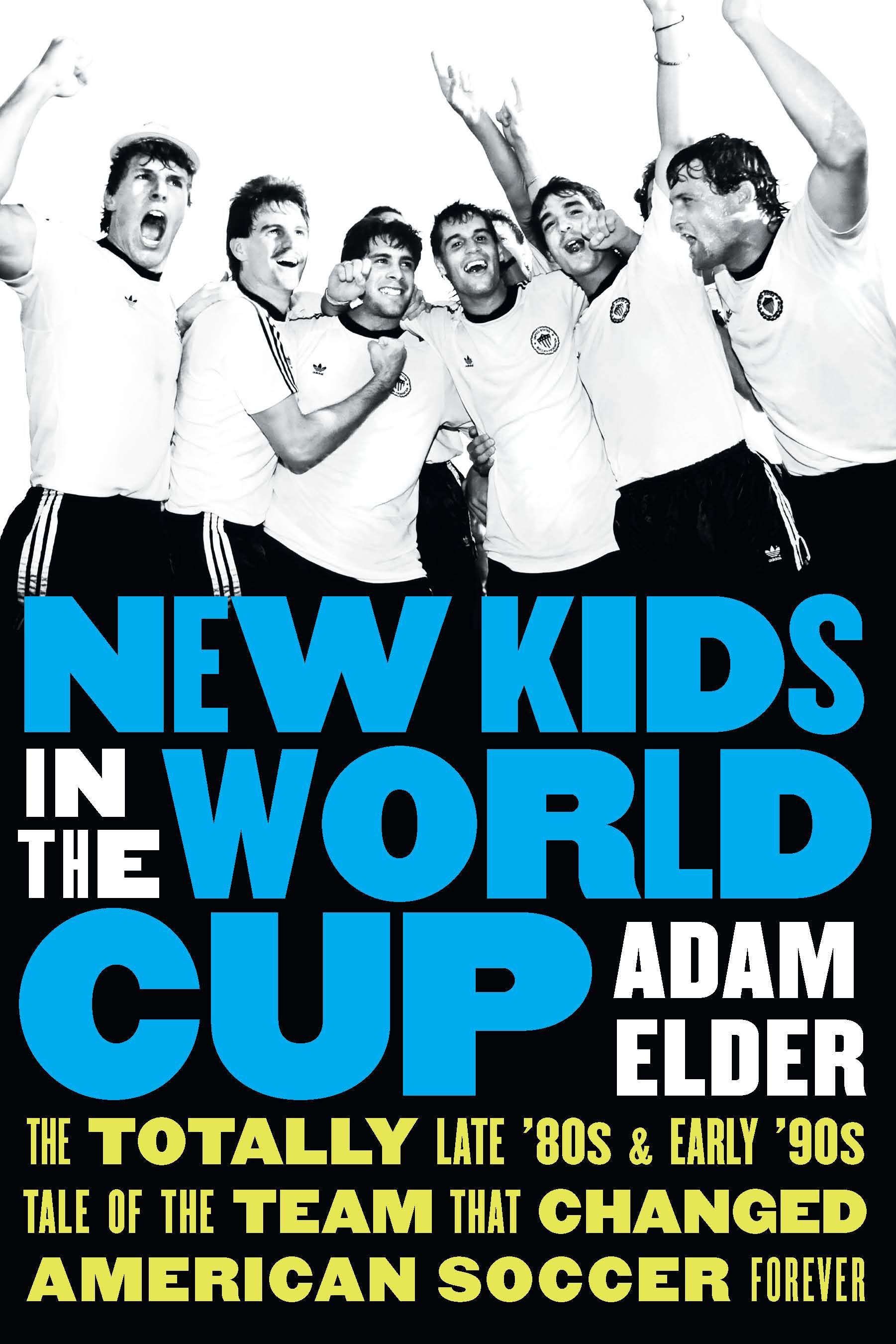
Review of "New Kids in the World Cup"

 Every current fan of MLS and the US Men's National team owes a debt of gratitude to the 1990 US team.  Without their stunning qualification for that year's World Cup, the current state of US soccer would not be possible.  This book is a great ride with that team through qualification and the tourney.  Here is my review of "New Kids in the World Cup". 


Title/Author: “New Kids in the World Cup: The Totally Late '80s and Early '90s Tale of the Team That Changed American Soccer Forever” by Adam Elder

Rating: 5 of 5 stars (excellent)

Review: When the United States men’s soccer team qualified for the 1990 World Cup, that was the first time in 40 years that they played in the tournament.  It was such a surprise that most people associated with the tourney and soccer felt that the United States would embarrass themselves and made many wonder why they were selected to host the next tourney in 1994.  The road that team took to Italia ’90 is described in this fun book by Adam Elder.

Those readers who were not following US men’s soccer (and that would be many) at the time may be amazed to learn how different the funding, salaries and everything else that goes along with it was at that time.  There was no Major League Soccer – or any professional league in the United States since the demise of the North American Soccer League in 1985.  The team was concerned that they would not be able to continue playing the game they love. At the time, there was serious concern there would not be a US soccer team.  In 1986, after failing to qualify for that year’s World Cup, the US team played only two official matches.  It was a dark period and Elder’s writing about that time helps set up the rest of the book, which was terrific.

When the US team defeated Trinidad and Tobago to qualify for the 1990 World Cup, it was the culmination of an adventure of a group of men who were unknown to most, including soccer fans and media in their own country, but coach Bob Gansler knew the talent and determination of guys like Tab Ramos, Bruce Murray, Tony Meola (who supplanted David Vanole as goalkeeper) and Michael Windicshmann.  Elder’s writing about these players included using their nicknames like “Windy” (Windischmann) and “Juice” (Murray) makes the reader feel like he or she knows them on a personal level.  The stories about their games and travels, especially those in Central America when the pressure was at its greatest, was mesmerizing and have many “can’t put it down” moments.

The story didn’t end with the qualification into the tournament, although it felt like that should have been the climax of the book.  The writing about the three games played by the US in group play was just as good, even though they lost all three games. It was the same play-by-play account that Elder wrote for the qualifying games and he included quotes from the television announcers. This makes it apparent that part of the research was watching the games as well as interviews and the usual research methods.  When one considers how different media was in the late 1980’s and early 1990’s, this shows the author’s dedication.

The writing style isn’t all that typical and does read as more suited for readers of a certain age, but it’s just so darn fun to read. From naming each chapter for a popular song from that era to the liberal use of the player’s nicknames, Elder has written a book that any American reader who enjoys today’s version of soccer in the United States should read.  If it was not for this scrappy bunch of players, there would not be the current high salaries for the US men’s team, there would not be the wall-to-wall media coverage and there wouldn’t even be Major League Soccer without this 1990 team.

I wish to thank University of Nebraska Press for providing a copy of the book in exchange for an honest review.

Link: New Kids in the World Cup: The Totally Late '80s and Early '90s Tale of the Team That Changed American Soccer Forever: Elder, Adam: 9781496229434: Amazon.com: Books

Tuesday, August 2, 2022

Review of "My Greatest Save"

While most will associate the 1999 Women's World Cup with the famous picture of Brandi Chastain, when I saw this book was offered for review, I picked it up right away as I remembered that Briana Scurry played just as big a role in that historic victory over China as Chastain did.  This is a very good sports memoir that many would enjoy reading.  Here is my review of "My Greatest Save."


Title/Author: “My Greatest Save: The Brave, Barrier-Breaking Journey of a World Champion Goaltender” by Briana Scurry with Wayne Coffey

Rating:  4 of 5 stars (very good)

Review: When the United States National Women’s Soccer Team (USNWST) won the 1999 World Cup, most remember the famous reaction by Brandi Chastain who, after she scored the winning goal in a penalty kick shootout, she ripped off her jersey in the celebration.  What is not remembered as much is how the goalkeeper for the team, Briana Scurry, made an incredible save on one of the kicks from China that made Chastain’s winning moment possible.  Scurry’s career was very successful, and she discusses that along with her personal life in this easy-to-read memoir written with Wayne Coffey.

I use the term “easy-to-read” because aside from possibly a few soccer terms, this is written in simple, conversational language. There is plenty of humor in snippets that may sound like “dad jokes.” No matter the topic, even during her darkest time when she had thoughts of suicide, Scurry writes with a relaxed and mostly even keeled mindset.  It seemed amazing that she could discuss thoughts about jumping off a bridge into rushing water with the same process as she did about saves made during crucial international matches.

She also writes about social issues that one might expect, given that she is a high-profile Black lesbian athlete, but she does not step into any activism or strongly worded statements.  If she has very strong beliefs, they were not present in the book.  The best example is when she realized that she was gay with this statement: “…I was awakening to the reality that I was a lesbian and was totally at peace with it.  There was no reason for me to issue some sort of declaration and have it notarized and counter signed.”  She also has similar thoughts on racism as being Black, she experienced it and expressed her displeasure but stopped short of calling for strong measures.

The best parts of the book, as one might expect, is her memories of some of the better moments of her soccer career, such as the aforementioned 1999 World Cup along with two gold medals in the 1996 and 2004 Olympics.  Goalkeepers have their own sets of training, conditioning, drills and camaraderie – and Scurry brings all of those to the reader with great recollections of game action, of interactions with teammates and opponents and the joys and sorrows of important wins and losses. 

While the title might make a reader expect a book with very dramatic passages, this book really doesn’t have those – instead, a reader will go on a journey into the world of a goalkeeper who left her mark in international and American soccer and wants to share it all with the readers.

I wish to thank Abrams Press for providing a copy of the book via NetGalley in exchange for an honest review. 

Link:  Amazon.com: My Greatest Save: The Brave, Barrier-Breaking Journey of a World Champion Goalkeeper: 9781419757679: Scurry, Briana, Coffey, Wayne, Roberts, Robin: Books


Saturday, March 21, 2020

Review of "Golazo!"

This book was certainly one that was not on my radar, but one of the online book clubs I belong to had a member suggest this as a buddy read.  Why not, I thought - it would expand my reading on soccer beyond the United States and Europe.  While it took awhile, I do believe that any soccer/football fan would enjoy "Golazo!"  Here is my review. 


Title/Author:
“Golazo! The Beautiful Game from the Aztecs to the World Cup: The Complete History of How Soccer Shaped Latin America” by Andreas Campomar

Tags:
Soccer, Football (European/Latin America), history, politics, World Cup

Publish date:
May 6, 2014

Length:
492 pages

Rating:
4 of 5 stars (very good)

Review:
The history of football (or soccer – this review will use the term “football”) in South American is not only rich with exciting players and teams on the pitch, but also colorful on how much it is intertwined with the politics of the continent’s nations.  This book by Andreas Campomar is a complete, detailed history of the “beautiful game” in that area of the world.

While the title does state that the book is about football in Latin American, once the ancient history about the game with the Aztecs is told, football and politics in three South American nations make up the bulk of the material:  Brazil, Argentina and Uruguay. While this would not be completely surprising as these three nations have won nine World Cup championships among them, the book does lack material on most of the other nations, with a notable exception of Chile and Columbia, and practically ignores Central American football.  While this can be understood to a degree with the author being a native of Uruguay, this felt to make the book slightly incomplete despite its wealth of research and material.

There are times when the reading is slow and difficult as so many details are crammed into a passage, including many names of players that only appear once as that person’s last name. When this was happening, as it especially did when the discussion was about some of the best years for either Brazil or Argentina, I had to slow down and sometimes backtrack because I was getting lost.  Readers who are avid fans of these nations’ team or knowledgeable about the history may not have any trouble with these parts.  However, for a fan who either follows the sport in other parts or the world or is simply a casual fan who wishes to learn more about these legendary national teams, this might become a challenge.

However, working one’s way through this is certainly worth the time and effort as the football is rich with history. The most enjoyable section of the book for me was the description of how the Aztecs played the game.  If American fans feel today’s game lacks offense, then they wouldn’t want to know how difficult it was to score at that time.  Other excellent sections of the book include how Uruguay became a soccer powerhouse in the 1930’s and 1940’s, winning two of the first four World Cup tourneys and how Brazil’s rise to football power in the 1960's paralleled that of its government. 

Overall , this book is an excellent source of history on South American football and while at times is a dense and very detailed read, it is one that is recommended for readers who want to learn more about not only the game in the continent, but also about the politics of some of the bigger nations and how they closely related to the success or lack of success by the national football team.
                                                                       
Book Format Read:
E-book (Kindle)
                                                                                                                              
 Buying Links:

Sunday, August 9, 2015

Review of "Twelve Yards"

When I saw this book was being offered on NetGalley for review, I was intrigued - how can an entire book talk about penalty kicks?  Well, this book did so and was a fun read as well.  Here is my review of "Twelve Yards."


Title/Author:
“Twelve Yards: The Art and Psychology of the Perfect Penalty Kick” by Ben Lyttleton

Tags:
Football (English), soccer, World Cup, psychology

Publish date:
July 28, 2015

Length:
345 pages

Rating: 
4 of 5 stars (very good)

Review:
This sentence in the description of this book is a good description of the penalty kick: “The penalty kick is soccer in its purest form: kicker, goalkeeper, ball.” The distance between the ball and the goal is twelve yards. Since the goal is quite large and the goalkeeper cannot move until the kicker makes his move, it sounds easy for the kicker, right?  This book by Ben Lyttleton illustrates that is not necessarily true all the time.

Like the title says, the psychology of the penalty kick is covered in the book.  For this, Lyttleton uses a variety of sources – studies that have been devoted to measuring success on penalty kicks, interviews with players, coaches and others who have been involved in soccer and stories from famous games that were decided by penalty kick shootouts, including World Cup games, championship matches in various leagues and even some friendly matches as well.

There is no one consensus on the mindset of the kicker and the goalkeeper, and Lyttleton does a good job of presenting all sides to this argument.  From an expert who states a penalty kick is “90% psychological and 10% physical” to famous players who have missed penalty kicks saying that it wasn’t mental at all, just misplayed, the reader will be peppered with stories, interviews, game recaps and studies all devoted to that one play that is full of drama – the penalty kick.
I wish to thank Penguin Books for providing a copy of the book through NetGalley in exchange for an honest review.


No matter what topic a reader can think of about a penalty kick, this book has it covered.  Does the kicker or the goalkeeper truly have the advantage?  It is addressed.  If the reader wants to read about famous players and their experiences in this situation, many are covered – Pele, Diego Maradona, Johan Cruyff, and Zinedine Zidane are just a few of the sport’s legends who are mentioned in this book. How about famous shootouts, such as those that won World Cup tournaments in 1994 (men), 1999 (women) and 2006 (men)? Those are in the book as well.

This makes the book a great source of information on this simple but pressure-packed play.  Overall, it is a good and entertaining read.  Some of the statistical sections and reports on studies about the psychology were a tougher read, but overall this was an entertaining and fun book that soccer fans everywhere and of any level should enjoy.


Pace of the book:
It was a very smooth read during most of the book when the author was sharing stories, interviews and recaps but did seem to drag during the sections with statistical analysis, as I skimmed most of those sections after reading the theory behind the statistics.

Do I recommend? 
No matter what level of soccer fan a reader may be, there is something for everyone in this book. Many of the stories are entertaining, and one does not have to know about the history of the players, referees or teams involved to enjoy reading these stories about those twelve yards between the kicker and the goalkeeper when a penalty kick is called.

Book Format Read:
E-book (Kindle)

Buying links: